Why Salespeople Avoid the Phone and How to Break the Cycle
For most sales professionals, the phone is still one of the fastest ways to start conversations and generate revenue. Yet many salespeople avoid picking it up.
They check email first. They update their CRM. They research prospects. They tell themselves they will start calling after lunch.
Then the day ends and the calls never happened.
This is not laziness. It is something much deeper that affects thousands of sales professionals across every industry. It is called call reluctance.
Understanding why it happens is the first step toward breaking the cycle.
What Is Call Reluctance?
Call reluctance is the hesitation or avoidance that salespeople feel when they need to initiate sales conversations. It often shows up as procrastination, over preparation, or staying busy with tasks that feel productive but do not generate revenue.
Many salespeople know that prospecting works. They simply struggle to start.
The irony is that the more someone avoids calling, the harder it becomes to begin again.
Why Salespeople Avoid the Phone
Several psychological factors drive call reluctance. Most salespeople experience more than one of these at the same time.
Fear of Rejection
This is the most obvious cause. Nobody enjoys hearing no repeatedly.
Cold outreach can feel personal, even though it is rarely meant that way. When a prospect rejects the conversation, the brain often interprets it as personal rejection instead of a normal part of the sales process.
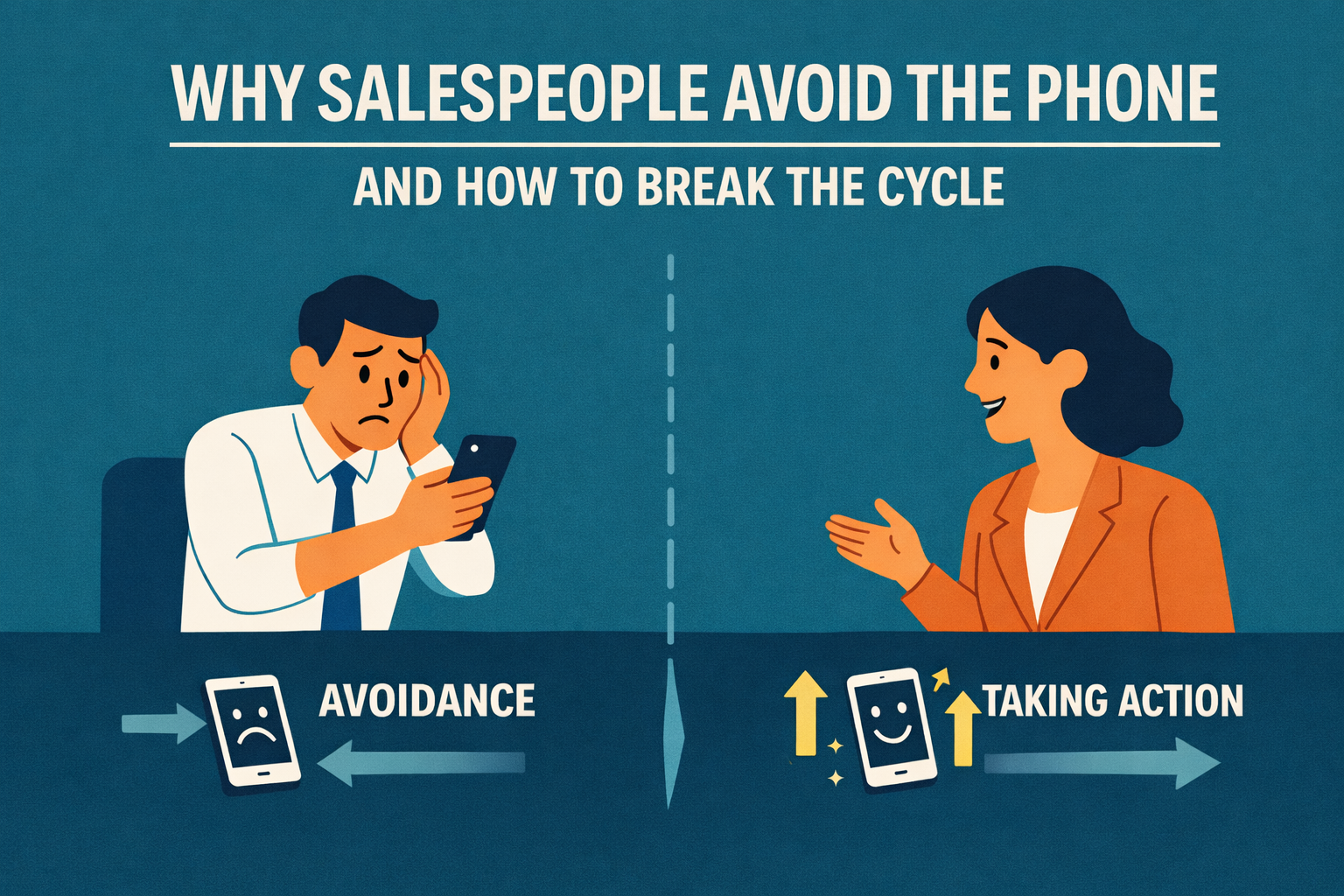
After a few negative interactions, many salespeople start avoiding calls to protect themselves from that feeling.
Fear of Interrupting Prospects
Many sales professionals worry they are bothering people.
They imagine the prospect being annoyed, busy, or frustrated by the interruption. Even though buyers expect sales outreach, the salesperson often assumes they are unwelcome.
This belief makes it much harder to start dialing.
Perfectionism
Some salespeople delay calling because they feel they need to be fully prepared.
They spend time researching companies, reading LinkedIn profiles, rewriting scripts, or tweaking emails. Preparation is useful, but perfectionism becomes a form of avoidance.
The truth is that sales conversations rarely go exactly as planned anyway.
Past Negative Experiences
One bad call can stick in your mind longer than ten good ones.
If a salesperson previously had a difficult interaction with a prospect, it can create hesitation the next time they reach for the phone. Over time that hesitation turns into a habit.
Loss of Momentum
Call reluctance often grows when salespeople go several days without prospecting.
Prospecting is like a muscle. The longer it sits unused, the harder it feels to start again.
Once momentum disappears, even making the first call can feel overwhelming.
The Real Cost of Avoiding Calls
When salespeople avoid the phone, the pipeline slowly dries up.
Meetings decrease. Opportunities shrink. Revenue becomes unpredictable.
The frustrating part is that many sales professionals work just as hard during these periods. They stay busy with tasks that feel productive but do not actually create new opportunities.
Without consistent prospecting, even the best closer eventually runs out of deals.
How to Break the Call Reluctance Cycle
The good news is that call reluctance is completely manageable once you understand it. The key is to focus on action instead of motivation.
Here are several practical ways to start breaking the cycle.
Start With a Small Commitment
Instead of telling yourself to make fifty calls, start with something simple.
Commit to five calls.
Once you begin, momentum usually takes over. The hardest part is almost always the first dial.
Focus on Conversations, Not Outcomes
Salespeople often avoid calling because they are thinking about rejection before the conversation even starts.
Shift your focus to the goal of starting conversations. You cannot control whether someone says yes or no, but you can control the effort you put into reaching out.
When the goal becomes activity instead of perfection, pressure drops immediately.
Create a Daily Prospecting Routine
Consistency removes much of the anxiety around prospecting.
Choose a specific block of time each day that is dedicated to calls. Treat it like a non negotiable meeting with your pipeline.
When prospecting becomes part of a routine, it requires less mental energy to begin.
Track Activity Instead of Just Results
Many salespeople judge their success only by closed deals or meetings booked. That makes prospecting feel discouraging when results take time.
Tracking daily call activity provides immediate wins. Every call becomes progress toward your goal.
This simple shift keeps motivation high even when outcomes are delayed.
Remember Your Value
Sales outreach is not an interruption when it is done well.
You are offering a solution that could genuinely help the person on the other end of the line. When salespeople remember the value they provide, calling feels less like bothering someone and more like starting a helpful conversation.
The First Call Is the Hardest
Call reluctance affects almost every salesperson at some point in their career. The difference between top performers and everyone else is simple.
Top performers make the call anyway.
They understand that discomfort is temporary but opportunity is created through action.
The next time you catch yourself avoiding the phone, do not overthink it.
Dial the first number. Momentum will handle the rest.
Not Sure If You Have Call Reluctance?
Many salespeople experience call reluctance without even realizing it. It can show up as procrastination, over preparation, or constantly finding other tasks to do instead of prospecting.
If you are curious whether call reluctance might be affecting your sales performance, take the EKG Quiz.
The EKG Quiz is designed to help sales professionals quickly identify if they struggle with call reluctance and what type they may be experiencing.
It only takes a few minutes, and the results can give you insight into what might be holding you back from consistent prospecting.