What is Call Reluctance and Why Should Sales Managers Care?
You have hired someone who interviewed well, checked all the boxes, and seemed genuinely enthusiastic about the role. A few weeks in, the activity numbers are low, the pipeline is thin, and they seem to find every possible reason to delay making contact with prospects. Sound familiar? There is a name for what you are likely dealing with, and it is called call reluctance.
Defining Call Reluctance
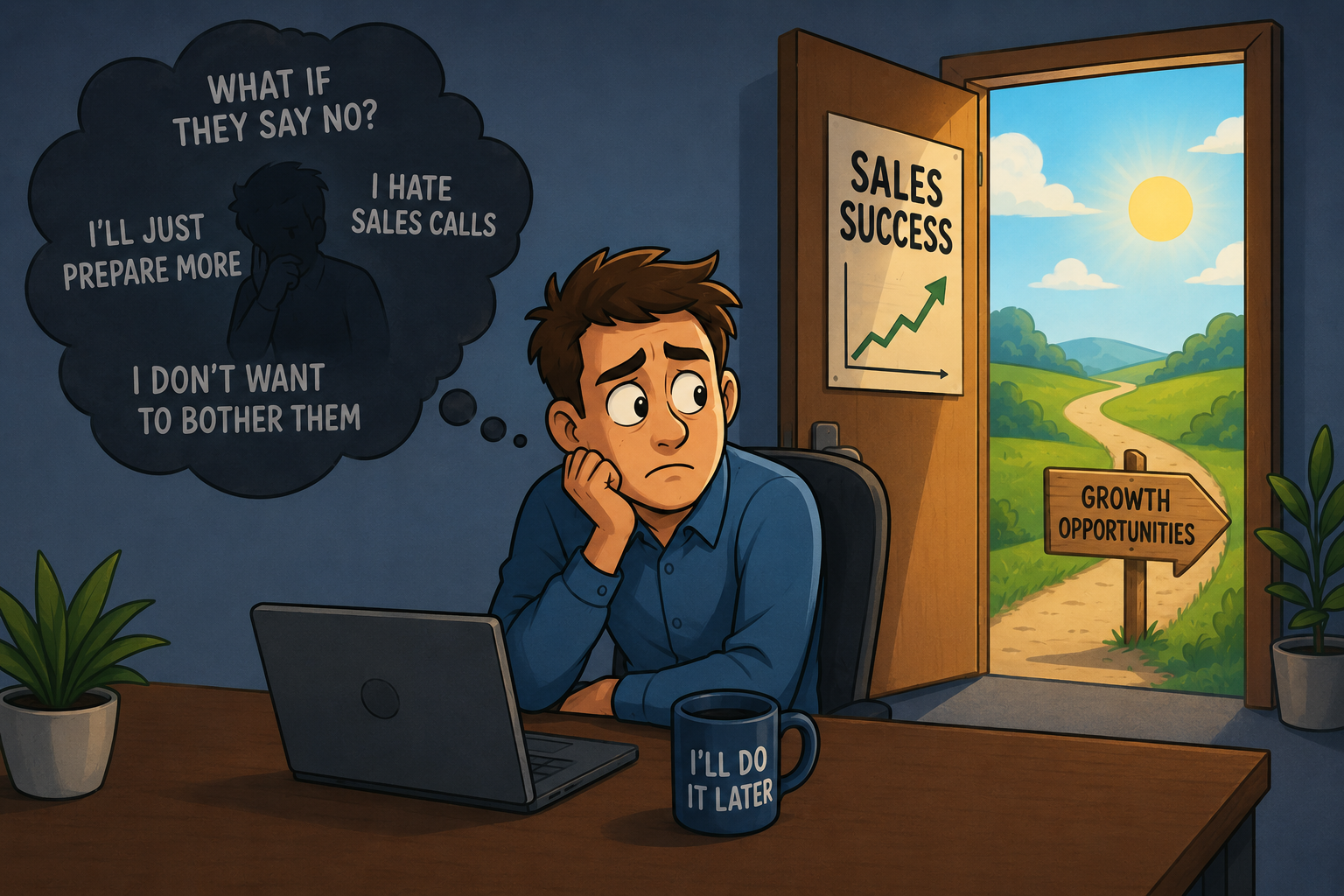
Call reluctance is not laziness, and it is not a lack of skill. It is a specific emotional hesitation that gets in the way of initiating contact with potential clients. Salespeople who experience call reluctance often know what they should be doing. They understand the value of prospecting. But something in their psychology puts the brakes on the behavior before it starts.
This distinction matters because it changes how you respond to it. If the problem is skill, you train. If the problem is call reluctance, you need a different kind of intervention, and the first step is accurately identifying what type is present.
The Sixteen Types Measured by the SPQ/FSA
The SPQ/FSA measures sixteen distinct forms of call reluctance. Some of the most common include Doomsaying, where a salesperson focuses on worst-case scenarios and catastrophizes rejection. Yielder call reluctance involves a tendency to avoid conflict with prospects out of fear of being seen as pushy or intrusive. Separationist reluctance affects salespeople who struggle to mix their personal relationships with business.
Other types include Oppositional Reflex, which shows up as resistance to being managed or coached, and Hyper-Pro, where a salesperson spends so much time perfecting their materials and preparation that they never actually make the call. Stage Fright affects those who are comfortable one-on-one but freeze in group selling situations.
Each type has a different behavioral signature and responds to different coaching approaches. Treating them as one undifferentiated problem is why many sales coaching efforts fail to produce lasting results.
The Cost of Ignoring It
Call reluctance does not tend to improve on its own. In moderate cases, it stays roughly stable. In more serious cases, it compounds over time, especially if the salesperson is not receiving targeted coaching. The result is a salesperson who is active enough to stay employed but never reaches the level of performance they are capable of.
For sales managers, this translates directly into revenue. A salesperson who makes two-thirds of the calls they should be making is producing at two-thirds of their potential, assuming everything else in their process is sound. Over a full sales team, that gap adds up quickly.
Using the SPQ/FSA as a Diagnostic Tool
The SPQ/FSA gives sales managers an objective picture of where each team member stands across all sixteen call reluctance types, plus the composite Brake score that aggregates them. That information can be used at the hiring stage to predict who is likely to struggle with prospecting activity, at the onboarding stage to proactively address tendencies before they become habits, and at the coaching stage to target development efforts where they will have the most impact.
Not Sure Where to Start?
If you want a fast, no-cost way to see whether call reluctance might be affecting your team's performance, our free EKG Survey is available at callreluctance.com/free-call-reluctance-survey. It takes only a few minutes and gives you a quick pulse check before you invest in the full assessment.