Why High-Quality Leads Don’t Eliminate Sales Call Reluctance
If a salesperson is given high-quality leads, does that automatically remove the barriers to making sales?
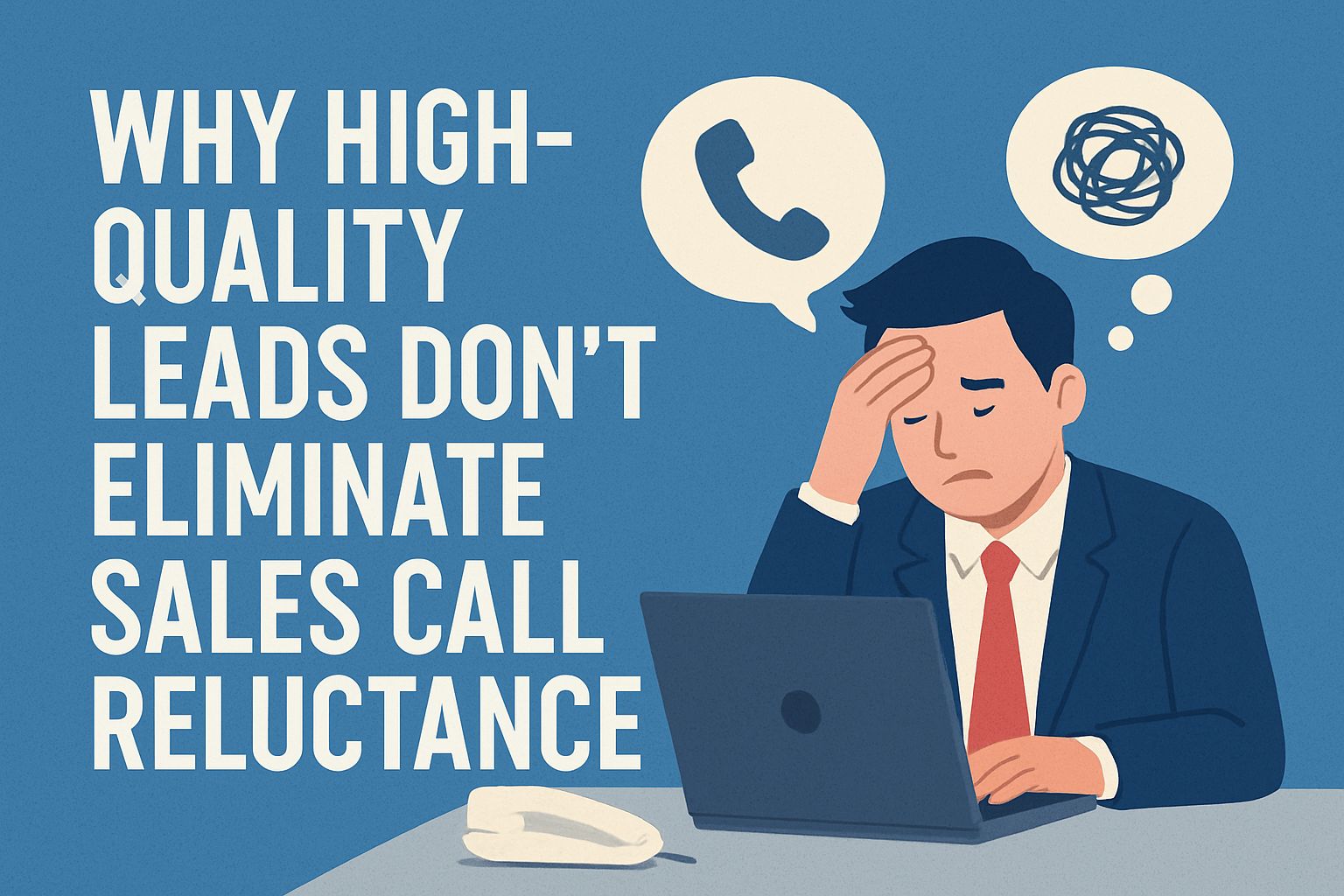
The answer is no. Because the real challenge is not only about having leads, but about the willingness to act on them. When hesitation takes over, it is called sales call reluctance.
What Is Sales Call Reluctance?
Selling has always been defined as a process of persuasion. Yet, what is often overlooked is that salespeople sometimes need persuasion just to get started.
Sales call reluctance is the hesitation to initiate contact. It is the combination of thoughts, feelings, and behaviors that prevent sales professionals from reaching out to potential buyers. Instead of moving forward, they pause, delay, or avoid the activity altogether.
Research shows there are sixteen distinct forms of call reluctance, and the average salesperson struggles with five of them. Some common examples include:
Over-preparing before a call instead of actually dialing
Yielding to hesitation and waiting for the “perfect” time
Avoiding referral requests out of fear of rejection
Why Leads Alone Don’t Solve the Problem
Many companies invest heavily in marketing to provide their teams with warm, qualified leads. This support saves time and focuses energy on prospects that are more likely to convert.
However, leads alone cannot fix call reluctance. If a salesperson avoids reaching out, hesitates to follow up, or resists consistent outreach, those leads will still go untouched. The underlying issue remains: reluctance blocks action, even when the opportunity is right in front of them.
The Role of Persistence and Follow-Up
Most sales do not close on the first call. They require persistence, relationship-building, and multiple touch points.
When salespeople have higher levels of call reluctance, or when their motivation and goal focus are weak, they are more likely to skip follow-up activities. That hesitation leads to lost opportunities and shrinking pipelines. In other words, it is not the quality of the lead that determines success, but the consistency of action.
Measuring Call Reluctance with the SPQ
This is where tools like the Sales Preference Questionnaire (SPQ) make a measurable difference. The SPQ reveals where call reluctance is present and how strongly it affects performance.
Once reluctance can be measured, it can be managed. And when sales teams learn to manage it, they grow revenue, improve performance, and close more deals.
Learn More
High-quality leads are a powerful advantage, but they cannot erase call reluctance. The real barrier to sales success is not access to opportunities, but the willingness to act on them consistently.
If you want to understand how call reluctance is affecting your team, and how to overcome it, explore the insights that the SPQ Gold assessment can provide.
Learn more about the SPQ and how it can help your sales team succeed.
Until next time, measure what matters.